

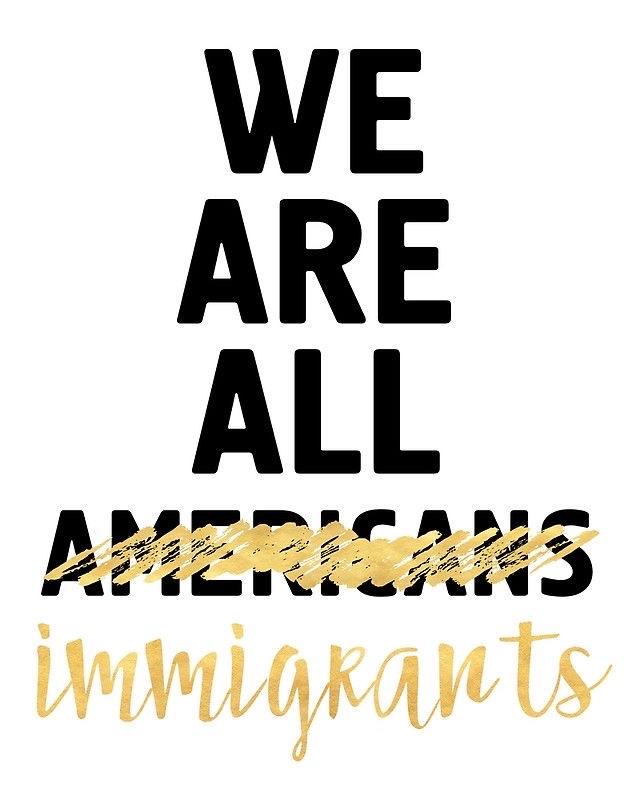
Lately I have been thinking a lot about my immigration journey. To be totally honest, I realize that I overestimated my adaptive skills. It has been 4 years since I moved away from home. “Seems like a pretty long period of time”…said no immigrant ever.
In fact, I am just starting to adjust to the USA lifestyle ( except for food preferences —one can not eat all the junk food and snacks hoping to stay healthy and good-looking). I choose to eat in order to live, not to live in order to eat. But that’s not the point of my article. Moreover, food is the very least of the things that make me wonder and analyze my new life across the Atlantic Ocean.
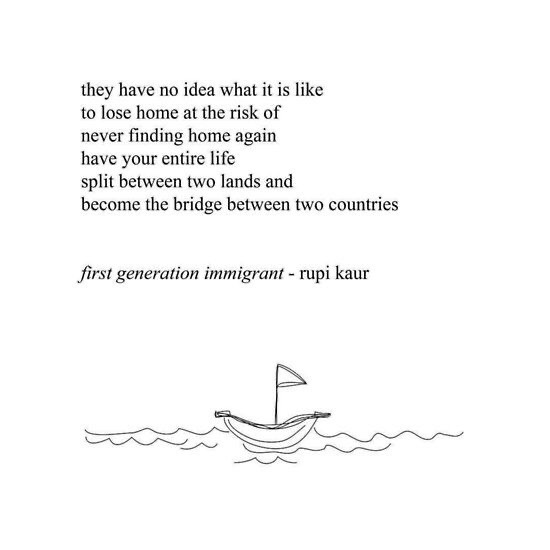
What is the right tool to use in order to turn a frustrated foreigner into a satisfied new American? In my humble opinion, the magic wand lays somewhere between ability to watch and learn from your surroundings and flexibility of mind. Yes, yes, the knowledge of English is not an obvious answer.
I have dedicated my life to learning languages. Don’t take me wrong, it does help to be able to communicate with people without so called “language barrier”, but it won’t make you feel at home in a new country of residence. There are much deeper layers of our personalities that have been shaped elsewhere, our experience that was very different from the one we are earning at the new homeland, for English to be the key here. All the above mentioned factors influence our worldview in a drastic way. As they say: no matter where you go, there you are.

As a freelance interpreter I interact with various people on a daily basis: elderly, middle aged, toddlers, teenagers, etc. Most of them are Ukrainian or Russian speaking immigrants. Some lived in the USA for the past 20-30 years but haven’t learnt a bit of American English. For these individuals adjustment has never fully gone through. Why? Simply because they live in, what I call, an imaginary “Time Travel USSR-land”. Many don’t even see the point of learning English. They do regular shopping at Russian stores ( time stood still there since 1990—it could be a gem of a location for shooting retro movies); they have friends exclusively from the former USSR republics ( because they do not like or trust Americans of other origins); from time to time they even have thoughts of coming back to their motherland but these are not serious intentions —just nostalgic moments; finally—they despise the American ways and traditions. Basically, these immigrants have never fully immigrated. They keep on living in the post USSR-land that has somehow moved geographically to the Western Hemisphere.
Please don’t get me wrong, preserving one’s culture and traditions is wonderful and worth doing for the future generations but…you HAVE immigrated, you HAVE made a choice to live and raise your kids in the USA. It’s not fair to pretend that you didn’t leave your country of birth, it’s not a wise move. So try unveiling the American cultural code, try observing certain traditions that are totally new to your family. You might like it. For example, I absolutely fell in love with Thanksgiving, I started decorating our entrance door according to the season or holiday with a beautiful door wreath and occasional visits to the pet store full of luxurious outfits and anxiety management pills for dogs always make my day).
What I am trying to say here is that, on one hand, getting integrated into such a various melting pot society isn’t easy but, on the other hand, it’s rewarding. Me, I met people from all over the world only when I moved to Philadelphia. I would have never even seen them if I stayed in Kyiv!

The ability to adjust to a new place varies depending on generation. No doubt, the age of an immigrant plays a huge part in terms of absorbing the new lifestyle. The younger a child is when she or he changes the country of residence, the easier their transition goes.
My elder daughter was only 4 when we moved to the USA and now, turning 9, she is much more American that I could ever be. I remember watching local news one evening and expressing surprise to see a woman who worked as a garbage truck driver. Alisa didn’t understand what shocked me so much. She wasn’t taught that labor can be either feminine or masculine. She said: “Mom, maybe it’s her dream job! Women can do any job they want!” “WOW, here is one American set of brains”, I thought. Less limits, more freedom in my young girl’s mind.

Another benefit of living in the States is cultural variety. It teaches kids acceptance and tolerance ( I have to admit my compatriots in Ukraine need to work harder on these qualities). At school kids have more tools of expressing their unique personalities. American children aren’t too shy or uptight, they aren’t afraid to be themselves. I find it rather crucial for the successful future. For instance, I had to fight plenty of nonexistent windmills along my life path due to the Soviet-like upbringing. Hopefully, my daughters won’t have to deal with anything of that kind.
As always, the hardest thing of all is to find BALANCE, a comfortable situation when you have fully integrated into the new reality but still keep your heritage intact for the descendants. I am working hard to achieve the Buddha state of mind. I really don’t want to become a bitter seventy year old woman who hates people around, not realizing the problem lays within her, not within others.
By the end of the day, every man is the architect of his own fortune. We always reap what we sow. I hope my future “harvest” will be bountiful. I would hate to disappoint myself.
 Ukrainian in Philly